
Role of Mental Arithmetic on a Child’s Cognitive Development

Abacus mental arithmetic is popular in Singapore. Classes are recommended for students of different ages, but an early start is particularly beneficial for children aged 4 to 12. They will gain a solid foundation in mental arithmetic in Singapore, and the impact of abacus mental arithmetic on their cognitive development cannot be overlooked.

Enhanced Multitasking Abilities

Abacus classes in Singapore accelerate brain development. This is one reason why arithmetic mental math is recommended for young children. As their brains develop, abacus mental arithmetic helps with brain activation. 

The left side of the brain is associated with logic. It handles calculation logic, handling the step-by-step process of finding math solutions. On the other hand, the right side of the brain is creative. It processes mental images, which are common in every abacus in Singapore.

Over time, when students are exposed to abacus mental arithmetic, they develop creative problem-solving skills. They can efficiently multitask and solve math problems quickly and efficiently. 

Enhanced Cognitive Fitness

One way to ensure children have the best cognitive health is to keep their brains active. When you enrol them in the best abacus class in Singapore, they will be exposed to various math problems that will trigger their critical thinking skills and help them develop effective ways to solve arithmetic mental math. 

Practicing the abacus in Singapore regularly creates more neural pathways. Some studies also show that students attending abacus classes in Singapore have more grey matter. This naturally enhances perception, movement, speech, and learning. 

Memory Expansion

As students spend more time learning abacus mental arithmetic, they will enjoy an expansion of their core memory. For example, when solving addition and multiplication math problems, they can mentally hold carry-over digits and add them to their final answer with ease. 

Mental visualisation is advanced under abacus mental math. Students attending abacus classes Singapore also develop an ability to follow complex math instructions. These skills are also beneficial in other subjects, such as Geometry, as students can easily handle complex questions. Strategy games, such as chess, are also easier for students in the abacus class in Singapore. 

Enhanced Speed in Solving Problems

Students are tested not only on their ability to solve math problems correctly but also on how quickly they can complete the task. Abacus mental arithmetic in Singapore enhances a child’s processing speed. It is estimated that, compared to their peers, children in abacus classes process information 30% faster. 

Impulse Control

Young children, especially those who have just started school, often have a short attention span. Most lack impulse control and get easily distracted in class. This is one of the reasons why abacus math is recommended for children as young as 4 – 5 years old. An early start provides them with the training they need to enhance their attention and control their impulses.

Cognitive Flexibility

Another skill that children gain in the abacus class in Singapore is cognitive flexibility. They can easily switch between different calculations without feeling overwhelmed or confused. This skill enables students to handle math papers more effectively, especially in the PSLE, where a range of questions are presented, from simple to complex. 

Brain elasticity is at its peak in young children (4 to 8 years old), and parents can take advantage of this window by introducing abacus mental arithmetic. Cognitive changes are evident when children practice at least three times a week, with lessons lasting an average of 30 minutes per day. Combining abacus classes in Singapore with music, strategy games, and language learning will maximise the results.

What Is The Best Age to Start Abacus Math Classes?

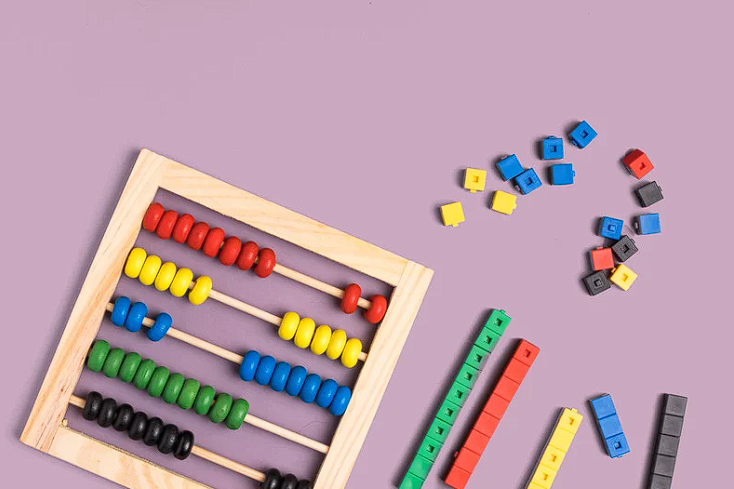
Paying for extra classes for a preschooler seems excessive, especially when they have yet to grasp formal education. A four-year-old is learning the basics, and they lack the attention span and interest in spending extra hours learning the abacus in Singapore. Considering this, why then is the abacus class in Singapore recommended for children as young as four years old? 

Why Ages 4 – 8 are Best for Abacus Mental Arithmetic

Brain Elasticity

The brains of children in this age bracket are flexible and highly adaptive. They can easily be trained in abacus mental arithmetic because their brain are still developing. They can easily develop mental visualisation and understand numbers. 

Developing Motor Skills

Young children are still developing their fine motor skills. They find it easier to move the beads on the abacus. Children of this age also thrive in abacus classes in Singapore because they are easily fascinated by toys and tools that require eye-hand coordination. 

Math Foundation

Preschoolers and children in the first years of primary school respond well to complex math later because they got the proper foundation in abacus. Once they learn how to handle arithmetic mental math, they will excel as they advance in school.

Habit Formation

It is easier to train young children to develop good learning habits when they are young. Regular attendance at abacus class in Singapore instils discipline and a commitment that helps children thrive in arithmetic mental math. 

Is Abacus Mental Arithmetic Beneficial to Older Children?

Although the ideal age to enrol children in the best abacus class in Singapore is typically four years old, there is still room for children aged up to 12 years. You can still use the abacus class in Singapore for kids in this age range because it remains a helpful tool. 

Abacus classes in Singapore are best for older children who:

  • Struggle with basic math.
  • Enjoy speed math competitions. Mental arithmetic in Singapore helps older students prepare for competitions.
  • Prefer using unique learning techniques, including the abacus.

At What Age Are Abacus Arithmetic Classes Ineffective?

While there are some ages where the best abacus class in Singapore is most effective, students can learn it at any age. The only challenge is the risk of diminished returns, which is common in students above 12 years old. 

Older students lack mental visualisation, and those who do, it is not as vivid as that in younger children. Additionally, the curriculum in upper primary is more complex, so abacus classes in Singapore may not be helpful, as they are best suited for basic math. 

Younger children are also unlikely to be bothered by the repetitive tasks in the abacus class in Singapore. On the other hand, older students may learn more quickly since they already possess a basic understanding of math. Older students are also intentional when using abacus tools because they are aware of the benefits of using the abacus. 
Age is a crucial factor in arithmetic mental math. However, there are unique circumstances that may require older students to join abacus classes in Singapore. Parents and teachers can decide whether students will benefit from abacus training.

5 Common Mistakes While Preparing for English Composition in PSLE

In Singapore’s Primary School Leaving Examination (PSLE), English holds a significant weight. Many students and parents navigate the complexities of English language studies, aiming for excellence in the PSLE. However, several common mistakes can hinder adequate preparation.

In this article, we explore these pitfalls. We will also provide valuable insights on how to avoid them for a smoother journey to success.

Neglecting Reading Habits

One of the most common mistakes is underestimating the power of regular reading. Many students focus solely on textbook materials. They overlook the vast world of literature. Reading not only enhances vocabulary but also improves comprehension and critical thinking skills.

Parents and educators can introduce diverse genres to foster a love for reading. Fiction to non-fiction and encourage discussions about the content. Creating a reading environment at home is essential. It develops a habit that goes beyond exam preparation.

Ignoring Writing Practice

Students often neglect consistent writing practice in the rush to cover syllabus topics. English PSLE requires knowledge and also the ability to articulate thoughts coherently. Writing regularly, whether it’s creative compositions, essays, or reflective pieces skills. Setting aside time for writing exercises can significantly enhance a student’s expressive abilities.

Overlooking Grammar Fundamentals

Grammar forms the backbone of language proficiency. Overlooking its fundamentals is a grave mistake. Students sometimes need help understanding the rules through grammar lessons. It’s essential to revisit basic grammar concepts regularly. Interactive learning tools and real-life examples can make the learning process engaging. A firm grasp of grammar aids in error-free writing. It also boosts language confidence.

Consider signing your child up for English enrichment or tuition classes  to revisit the fundamentals of English and build a strong foundation, preparing them for English PSLE.

Disregarding Vocabulary Enhancement

Expanding one’s vocabulary is a continuous process. Many times, students make mistakes they usually don’t make in exam preparations. 

Students might rely on a set list of words without actively seeking new terms. Vocabulary enhancement is crucial for precision in expression. Implementing daily vocabulary-building exercises can significantly enrich a student’s language skills. Interactive vocabulary games and quizzes can make the process enjoyable.

Underestimating Time Management

In the pressure of exam conditions, time management becomes a critical factor. Some students focus so much on accuracy that they spend excessive time on a single section. They eventually leave insufficient time for the rest. Conversely, others prioritize speed but compromise on accuracy. Balancing both aspects is essential. Regular timed practice, simulated exam conditions, and practical strategies for each PSLE paper can help students strike the right balance.

Paving the Way for English PSLE Success

Students must avoid these common mistakes as they gear up for the English PSLE, as they can significantly impact their preparation journey. 

The key to success in English composition during PSLE is to cultivate an approach that includes regular reading, consistent writing practice, a strong foundation in grammar, vocabulary enhancement, and effective time management.

Parents and educators play a crucial role in providing the necessary guidance. They can create an environment that fosters language development beyond exam-focused activities. Students can unlock their full potential. They can approach the English PSLE with confidence and competence by addressing these issues.

3 Points of View in English Composition PSLE (With examples!)

English Composition writing during the PSLE (Primary School Leaving Examination) tests language proficiency and challenges students to think creatively. They encourage students to express their ideas coherently and creatively. One aspect that adds depth to compositions is the choice of the narrative perspective.

In this article, we look into the fascinating realm of three distinct points of view.

First Person Perspective

The first-person perspective is denoted by pronouns like “I,” “me,” and “my. ” It offers a direct and intimate connection between the narrator and the reader. This viewpoint allows the writer to become the protagonist. It provides a firsthand account of the events unfolding in the story.

Example

“I woke up to rain tapping against my bedroom window. Rubbing the sleep from my eyes, I realized it was the perfect day for a cosy adventure.”

Tips for Using First-Person Perspective

  • Embrace Emotions 

Utilize the opportunity to intimately convey the protagonist’s emotions, thoughts, and experiences.

  • Maintain Consistency 

Ensure a consistent narrative voice throughout the composition to enhance reader engagement.

Second Person Perspective

In the second-person perspective – the narrator is an outsider. It refers to characters using pronouns like “he,” “she,” or character names. However, the narrator has access to the thoughts and feelings of only one character. This viewpoint provides a balance between intimacy and broader storytelling.

Example

“As Tim walked through the crowded carnival, his eyes fixed on the Ferris wheel spinning against the evening sky.”

Tips for Using Second-Person Perspective

  • Character Insight

Use this perspective to delve into the emotions and motivations of a specific character.

  • Maintain Objectivity

Maintain an objective tone for an overarching narrative balance.

Third Person Perspective

The third-person perspective is the all-knowing narrator. It presents a narrator who knows the thoughts, feelings, and actions of all characters in the story. This viewpoint provides a panoramic view of the narrative. It offers insights into characters and events.

Example

“In the bustling market, Joana set up her stall, unaware that David, a curious journalist, observed her every move across the square. Meanwhile, a mischievous stray cat perched on a nearby rooftop.”

Tips for Using Third Person Omniscient Perspective

  • Narrative Depth – Exploit the opportunity to provide a comprehensive view of various characters and plotlines.
  • Clarity in Transitions – Signal shifts between characters or settings to avoid confusion and maintain coherence.

A Blend of Perspectives

Each perspective offers a unique storytelling experience. Adept writers often experiment with a blend of these viewpoints for added narrative depth. They begin a composition in the first person to establish a personal connection. Then, transition to the third person for a broader perspective. This creates a captivating storytelling tapestry.

In PSLE English Composition, it is essential to understand and utilize different narrative perspectives. They can transform a simple story into a captivating narrative. By experimenting with these narrative tools, students enhance their language skills. They also unlock the boundless potential of their creative minds.

Does English Tuition Improve PSLE Performance?

The cost of tuition, especially for Primary School Leaving Examination (PSLE) candidates, can be prohibitive for many Singapore households. Parents often use a child’s performance to decide if they should request tuition services, especially for subjects like English.

Besides cost, one of the concerns parents have is the effect of tuition on PSLE performance. Is the investment worthwhile?

The tuition culture in Singapore has been growing over the years, and this is attributed to the impact it has on student performance. It is estimated that over 70% of primary school students attend school. Most start tuition early and do it continuously until they do PSLE English and other papers.

The impact of English tuition Singapore is evident in student performance in competitive examinations, like PSLE. Students who receive tutoring support tend to have above-average results compared to students who do not enrol in an English tuition centre.

How English Tutors Help Students Improve PSLE Performance

Students in Singapore are moulded at a young age to develop healthy learning methods. Tuition encourages endurance and helps students develop critical skills that will help them tackle PSLE and other exam papers in the future.

Tutors help boost student performance in multiple ways.

  • Tutors help students practice what they learn in school, and even better, they have access to a professional to answer any concerns they may have.
  • Tutors help students develop communication skills.
  • Students learn how to answer exam questions.
  • Tutors help clarify difficult concepts. Most teachers do not have sufficient time to address every student’s needs, and a good English tutor may succeed where a teacher failed.

The guidance students get during English tuition goes a long way in boosting performance and helping them get to their desired course at the university.

When is English Tuition Necessary?

While tuition is considered a natural process in some homes, for many parents and students, it is often an intervention. If you’re not sure if your child should go for English tuition, especially if you have financial constraints, here are some tell-tale signs.

  • Your child is struggling in class. Sometimes students struggle with English because they need personalised learning, and the school cannot accommodate their needs. In this case, an English tutor will create a learning style that is likely to be beneficial to your child.
  • The PSLE exams are approaching. This is a great way to have targeted practice in readiness for the examination. It is also cheaper because the child doesn’t need to attend extra classes for an extended period of time.
  • Your child’s English foundation is shaky. Singapore has, over the years, emphasised the importance of English in school and beyond. Unfortunately, some children do not get the best foundation, and this affects their performance as they progress closer to PSLE. Tuition is a great way to correct any difficulties your child faces, from grammar to composition writing.

English proficiency is critical when handling PSLE English. Unfortunately, some children struggle with it and need extra attention, especially as they prepare for examinations. An English tutor is an investment that will pay off because this is not just about passing PSLE. When the child performs well in PSLE, it will build their confidence and strengthen their communication skills.

Components of PSLE English

Students preparing for PSLE English should be aware of the papers they will encounter, what to expect, and the weight of each paper in the final score. This way, when they go into the exam room, they know what percentage they are likely to lose if they make avoidable mistakes.

PSLE is the first major competitive exam that students take, and it sets the stage for future exams. Unlike Mathematics and Science where answers are either correct or not, English is intuitive. There are basic rules on grammar, vocabulary, and punctuation.

However, how you score will depend on how you interpret the question. You will encounter questions whose answers are all correct, but one is more correct than the others. These questions test a student’s critical thinking and analytical skills.

A student who wants to score AL1 (the highest score) should get at least 180 marks out of the possible 200. Understanding the different English PSLE papers, the scoring system, and the student’s strengths and weaknesses is critical because English tuition arrangements can also be made based on the parents’ expectations.

English Paper 1: Composition Writing

Time: 70 minutes.

Testing: Situational writing (15 marks)

Continuous writing (40 marks)

In situational writing, students are required to write a short letter, email, or report based on a given situation. This is a functional letter that has to fit a specific context. The paper tests the student’s ability to understand the situation, the target audience, and the context of the writing.

In continuous writing, the student is required to write a continuous prose of at least 150 words. The topic is given, and the student is required to focus on creative writing. PSLE English tuition will help students focus on areas the examiner will focus on when marking the paper.

Issues such as grammar, punctuation, creativity, and the ability to stick to the context.

The weight of this paper is 27.5% of the overall English PSLE mark. It may not seem like much, but it is also one of the most flexible English PSLE papers. Students can score the full mark or as close to the full mark as possible, based on the quality of the composition.

English Paper 2: Language & Comprehension

Time: 1 hour, 50 minutes.

Score: Booklet A (28 marks)

Booklet B (67 marks)

Weightage: 47.5%

Compared to English Paper 1, this paper carries more weight because the marks represent 47.5% of the total PSLE English score. While students need to aim to perform well on all papers, they should pay close attention to papers with a higher score possibility.

This paper tests a student’s vocabulary, grammar, and comprehension. At the English tuition centre, tutors help students compartmentalise questions and keep the answers simple.

English Paper 3: Listening Comprehension

Time: 35 minutes.

Score: 20 marks.

Weightage: 10%

In this paper, students are exposed to different spoken texts, followed by questions that test their listening comprehension. The paper takes a short time, and it carries the lowest weightage in the PSLE English exam. It may not appear to be as important as the other papers, but it is easy to get the top score if the student is keen.

There are several multiple-choice questions with answers that are closely related. Students who are keen on the texts will easily pick the right answers. It is also easy to pick the wrong answer if one has poor comprehension skills.

English tutors use different mediums (television, audiobooks, and radio) to expose students to devices that will test their listening comprehension and their ability to interpret and answer questions correctly.

English Paper 4: Oral Communication

Time: 10 minutes.

Score: 20 marks.

Weightage: 15%

This is another short but intense PSLE English session. Students are required to read aloud and interpret diagrams correctly. It seeks to test spoken English, tome, and pronunciation. Tutors will expose students to scenarios that will test their ability to convey different emotions using descriptive words and different tones.

PSLE English tests different areas, and preparation is key. The scores are divided across the different papers, and a student who is adequately prepared can easily get a high score on all the papers. 

Benefits Of English Tuition For PSLE Students

The budget for tuition in most Singapore households costs $200 to $1,000 a month. Some tuition centres charge even more, depending on their popularity and number of lessons. Most parents enrol their children for tuition with one goal: a good performance in PSLE.

Budget restrictions often force parents to limit the number of tuition lessons or restrict extra classes to specific subjects. English tuition is often neglected because other subjects (Mathematics and Science) are considered more difficult and probably worth the extra cost.

However, all subjects tested in PSLE are critical because they will collectively contribute to the final score.

Here are the benefits of PSLE English tuition:

Students Learn What To Expect From English PSLE

English tutors help candidates understand the English exams they will take and what each score means to their overall performance. For example, learners will appreciate that their composition writing will earn them 40 marks. English Paper 2, on the other hand, carries 95 marks.

English Paper 2 carries more marks, but grammatical and other minor mistakes can affect the overall score. A student who is great at composition writing and has the right skills to handle English paper 2 is likely to get a great English score.

However, if one focuses on composition writing and neglects English paper 2, the average score is likely to be low. If, on the other hand, a student focuses on paper 2 and has an average performance in composition writing, the overall score will be good.

An English tuition centre with professional tutors will emphasise the importance of all the English PSLE papers. Students will learn skills for answering PSLE English exams and increase the possibility of passing their exams.

The English tutor will also help the students strike a balance between PSLE English exam papers instead of focusing on only one component of the English exam.

Tutors Identify A Student’s Strengths And Weaknesses

The one-on-one sessions will help tutors identify a student’s weaknesses and strengths. Once the tutor knows the problem areas, they can focus on them. Sometimes all a student needs is a nudge to perfect their English skills.

The tutors will also sharpen the students’ strengths. The PSLE English tuition sessions will also test the student’s confidence in answering questions.

It Boosts A Student’s Confidence

One challenge many candidates face is a loss of confidence in their ability to score highly. Interestingly, of all the subjects tested during PSLE, students tend to be overconfident when it comes to English. However, some students need assurance that they are ready for PSLE.

If a student walks into that exam room with confidence, they are likely to be composed and calm enough to answer questions correctly.

Offers Comprensive Guidance

English tuition is a great way to ensure a student covers different areas of the English language. It covers reading, writing, speech, and listening skills. PSLE English tests all these skills, and a tutor will help prepare a student adequately.

The good thing is that the skills in the English language will be valuable beyond PSLE.

Every exam, including PSLE English, needs preparation. The best way parents can ensure the students have a shot at passing their exams is to enrol them in English tuition in Singapore. With the right influence and guidance, a high pass mark in English will help ensure the student gets their preferred course in secondary school.

The Basic Techniques of Rhythmic Gymnastics for Kids

Welcome to the world of rhythmic gymnastics – a blend of elegance, strength, and flexibility that takes the art of movement to a whole new level! Particularly in Singapore, this sport has captured the hearts of many kids, helping them transform their physical energy into a mesmerizing display of fluidity and grace. 

Rhythmic gymnastics is a beautiful way for children to develop physical abilities, enhance self-esteem, and broaden their horizons. So, whether your child is pirouetting in the living room or has a penchant for dancing, this guide will navigate you through the basic techniques of rhythmic gymnastics for kids.

What is Rhythmic Gymnastics?

Rhythmic gymnastics, also known as modern gymnastics or artistic gymnastics, is an Olympic sport that combines elements of ballet, acrobatic dance, and apparatus manipulation. It involves using hand-held apparatus such as hoops, balls, clubs, and ribbons to enhance the movement sequences.

Rhythmic gymnastics is an excellent sport for kids in Singapore to explore their physical and creative abilities. It helps them develop strength, flexibility, coordination, grace, and poise. Moreover, rhythmic gymnastics allows kids to express themselves in an atmosphere of fun and enjoyment.

The Basic Techniques of Rhythmic Gymnastics

Here are some of the five basic techniques you should familiarize your child with before they take on this sport:

Postures

Postures refer to the static poses in rhythmic gymnastics. It helps children develop body control and posture, thus providing them with a strong foundation in the sport. Common postures for kids in rhythmic gymnastics include arabesque, attitude, kneeling, and fishtail.

Body Movements

Body movements are essential for rhythmic gymnastics as they contribute to the overall aesthetics of the performance. Movements such as jumps, turns, and leaps are integral to this sport. They help children to develop agility, coordination, and balance.

Apparatus Manipulation

The apparatus used in rhythmic gymnastics helps add more complexity to the movements and poses. For instance, a hoop provides great resistance when spun around the body, allowing children to coordinate their movements and enhance strength. Clubs and ribbons can also be used to create beautiful designs in the air. Countless children in Singapore have discovered their passion for Rhythmic Gymnastics through captivating performances featuring enchanting apparatus like clubs and ribbons.

Rhythmic Expression

Rhythmic expression refers to the use of music to enhance the performance. It involves interpreting and expressing emotions through body movements that are in sync with the beat of the music. This helps children engage more in their performance, further developing their creativity and self-expression skills.

Combinations

Combinations refer to combining postures, movements, apparatus manipulation, and rhythmic expressions artistically. This helps children to practice their coordination and build upon their existing skills. They will learn to combine all the techniques with rhythmic gymnastics to easily create a beautiful and elegant performance.

This was all about the basic techniques of rhythmic gymnastics for kids. If you want to enrol your child in this sport, look for a reputable dance academy that imparts these skills. Your kid can soon perform breathtaking routines with the proper guidance and practice!

Five Reasons To Send Your Kids To Rhythmic Gymnastics Classes

Rhythmic gymnastics, a spectacular fusion of sport, dance, and art—offers an exciting, vibrant path for youthful exploration. It is not just about the glittering leotards or the mesmerizing tosses of ribbons and hoops. It is a holistic journey that fosters physical strength, mental resilience, and artistic expression in every child.

Although there are many activities and sports for children to explore, there are five main reasons why rhythmic gymnastics is an ideal choice.

Improved Coordination & Balance

Rhythmic gymnastics is a beautiful ballet of balance and coordination. Every twirl, leap, and catch encourages children to fine-tune their kinesthetic awareness and their understanding of where their body is in space. As they dance with hoops and ribbons, they’re not just performing but cultivating an intricate dance between their eyes, hands, and feet. This dance improves balance, sharpens reflexes, and enhances coordination skills beyond the gymnasium into every aspect of life.

Fosters Professionalism and Presentation Skills

The world of rhythmic gymnastics instils a sense of professionalism from an early age. Kids who engage in this discipline often become adults who understand the value of presenting themselves thoughtfully and appropriately in professional settings like job interviews.

The importance of meticulous attention to detail and a polished presentation are vital lessons learned in the gymnastics arena, where every performance is a culmination of a season’s rigorous training, compressed into ninety seconds of competition. These lessons extend beyond the gym, embedded deeply within them, guiding their interactions and pursuits in life.

Boosts Self-Confidence

Rhythmic gymnastics builds self-confidence, helping kids to understand the power of preparing for success and achieving goals. As they become aware of their capabilities, they learn how to increase their chances of success by strengthening weaknesses and developing strengths. With each successful performance, a sense of pride arises in persevering through complex practices and conquering any challenge gracefully.

Enhances Creativity & Self-Expression

Creativity flourishes in the world of rhythmic gymnastics. This sports discipline encourages children to explore and express their unique artistic style through movement. It presents an expressive canvas where kids can channel emotions, ideas, and personal narratives into powerful physical performances. Essentially, through the lens of rhythmic gymnastics, creativity converges with athleticism to form an extraordinary spectacle of self-expression.

Reduces Stress and Anxiety

Kids learn how to recognize and manage stress and anxiety through physical practice in rhythmic gymnastics. Especially in Singapore, where kids are constantly under pressure, whether from their parents, relatives, or school. Rhythmic Gymnastics classes can be one of the ways they relax their minds and indulge in the class. The discipline teaches that mental wellness is just as important as physical well-being. As children take steps to improve their strength, coordination, and performance in tumbling, ballet, or other movements, they experience a sense of calm through focused energy release. 

Building a solid connection with their body allows them to regulate anxiety when facing life challenges.

So, these are the five top reasons why children should consider taking up rhythmic gymnastics. It is a unique journey that promotes physical, mental, and emotional well-being in a safe and supportive environment. With the help of skilled coaches, students can explore their passions and find joy every step of the way!

How To Choose the Best Chinese Enrichment Classes 

When searching for Chinese enrichment classes in Singapore, you’ll discover hundreds of centres offering this service. You may be overwhelmed when choosing the perfect enrichment class for your child, especially if he struggles with Chinese at home and in school. 

You need to be cautious when choosing a Chinese enrichment class for your child, just as you would be when choosing a regular school. 

These factors will help you select your child’s best Chinese enrichment class. 

Class Sizes

You also need to check the average class size for the Chinese enrichment classes in Singapore. Class size is important because it tells you the level of attention the child will get. 

Some children thrive in group settings, while others need one-on-one sessions with the tutor. Most enrichment classes have a low student-teacher ratio to maximize the attention the child receives. 

Find out how your child responds to group classes. Do they thrive in this setting, or is a one-on-one session best? Your child may initially need to work with a tutor before progressing to a group setting when they are more confident and comfortable.  

Teaching Style

Language schools in Singapore use different approaches when teaching. Some use the multi-sensory approach on younger children. They use a hands-on, creative process with lots of social interaction, usually done in play groups. 

Some Chinese enrichment classes, specifically those for primary school students, focus on Chinese comprehension, vocabulary, and sentence structure. The enrichment classes follow the MOE syllabus to help kids perform well in their regular Chinese classes. 

Determine the teaching style that suits your child and find an enrichment class that is likely to have the most significant impact. 

Target Age Group

Chinese enrichment classes offer lessons to children of different ages. Some target 3-year-old children to give them a head start before they go to primary school. This is an opportunity for children who are yet to learn Chinese but are likely to opt for it in primary school. 

Some enrichment classes are open for children in primary school. Children who are yet to speak it, or those who don’t speak it regularly, benefit significantly from Chinese enrichment classes because they mimic those who speak Chinese regularly.

Some Chinese enrichment classes even offer training for older students in secondary schools. This allows students to dig deep into the Chinese language. They’ll use what they learn to advance their careers when the time comes. 

Incorporation Of the MOE Curriculum

All primary school children in Singapore must learn one of the three mother tongues languages (Chinese, Malay, and Tamil). Find out if the Chinese enrichment class has factored into the MOE curriculum in its programs. 

Since your child is already learning Chinese but needs more help, you should get a Chinese enrichment class that has aligned its program with the MOE curriculum. This will boost your child’s performance in class. 

When choosing the ideal Chinese enrichment class in Singapore for your child, these are the factors to consider. Some of these factors may be a priority for you, while others are secondary. However, getting the class most beneficial to your child is essential.